Eyes In
An eyes in camera push travels into the gaze until the irises own the frame. It does not stop at a close-up; the portrait becomes an interior of sclera, iris, and catchlight.

Narrative function
The thought is in the eye. Realization, a lie, a memory: you go there by traveling, not by cutting to an ECU.
The world around the face falls away until the eye is the room. A beauty close-up that never moves is not this shot.
If the eyes are not the location, stay at MCU. Mouth-in is the appetite cousin; do not mix the destinations.
How it works
Start on a face, end inside the eye. Slow push, no tilt, catchlights held.
Macro or a close diopter may finish the last centimeters. Identity must hold or the end face is a cut.
Prompt: Eyes-in push on [Subject], the camera traveling into the gaze until the irises own the frame, a portrait that becomes an interior.
When to use it
Use it when the scene turns inward: a decision, a lie, a memory landing in the pupil. Do not use it as a default portrait.
Compared with similar shots
A Push In can stop at a close-up of the whole face. Extreme Close-Up is a frame size, not necessarily a move.
Mouth In travels into lips and teeth. Eyes-in has one destination: the iris as architecture.
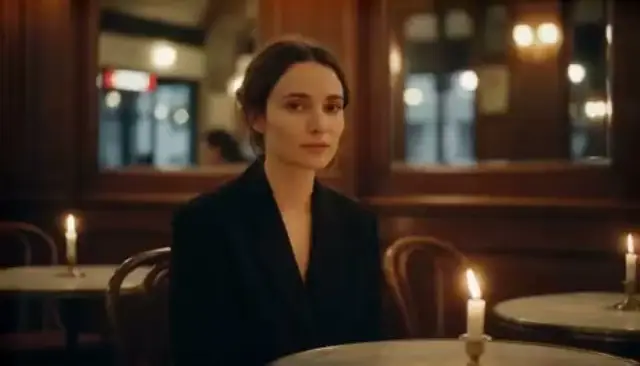
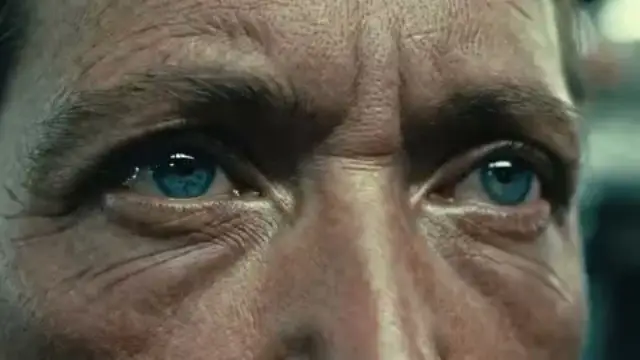
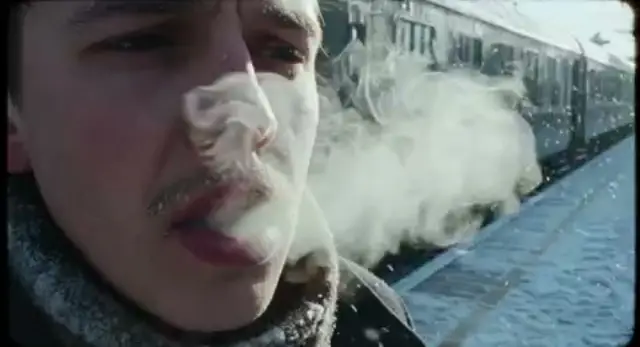
In film
Requiem for a Dream punches into pupils until the eye is a location. The Passion of Joan of Arc already lived in the eyes as architecture, often without the travel.
Grammar: the gaze as a room.
Prompt it
Name the travel and the end state. Still: Eyes-in push on [Subject], the camera traveling into the gaze until the irises own the frame, a portrait that becomes an interior.
Video: The camera pushes into [Subject]'s eyes until the iris fills the frame. Keep catchlights.
Forbid a cut to a new face.
What usually goes wrong
The usual wrong cousin is a pretty ECU with large eyes and no travel. The tell: a still portrait, whole face, no arrival inside the iris.
The fix: write the end state as iris fill, slow push, identity held.
Questions
What is Eyes In in film?
Eyes in is a push that travels into the gaze until the iris fills the frame. The portrait becomes an interior, not a standard close-up.
Eyes In vs Extreme Close-Up
An extreme close-up is a frame size and can be locked. Eyes in is a move whose destination is the iris as a room.
When should I use Eyes In?
Use it when the thought lives in the eye: realization, lie, memory. Do not use it as a beauty default.
How do I prompt Eyes In for AI image or video?
Write a push that ends on an iris fill. Example: Eyes-in push on [Subject], the camera traveling into the gaze until the irises own the frame.