Bounce Light
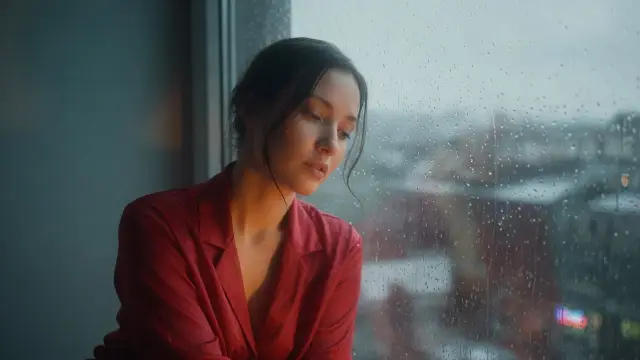
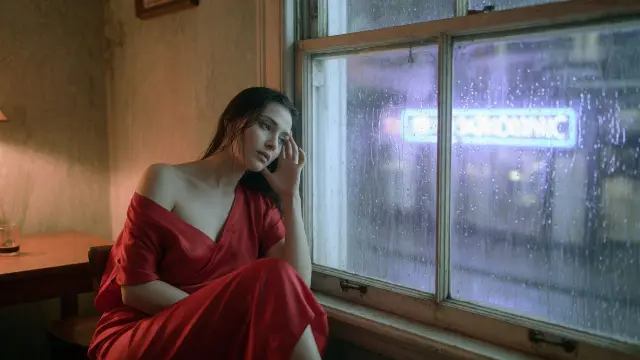
Bounce lighting reflects light from a surface (wall, ceiling, poly, card) before it reaches the subject, so the apparent source becomes that large surface. Direction remains, but shadow edges soften and wrap.
Narrative function
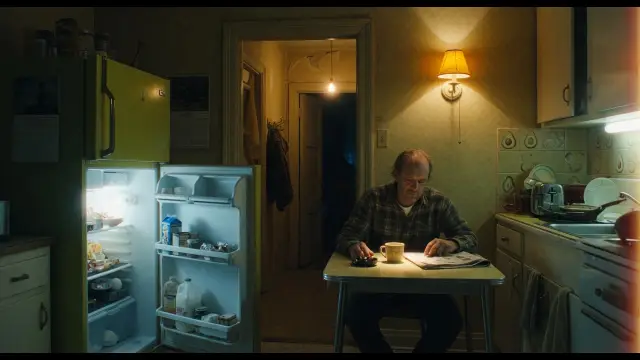
You keep a window side or a lamp side without the brutality of the bare source. Faces wrap, rooms feel inhabited, and the key still has a direction because the bounce surface occupies a place in the world.
Period interiors and daylight rooms use it so skin does not speckle. It is the wrong tool when you need razor shadows, a gobo pattern, or a hard split.
Bounce is a method, not a facial pattern: it is not Rembrandt, not split, not butterfly. Those patterns die if you bounce too much.
How it works
Aim a lamp or the sun at a white or neutral surface, then let that surface light the subject. Larger and closer bounce means softer light.
Color picks up the bounce surface: white stays honest, a cream wall warms, a green wall will tint. The key side is the side of the bounce, not the lamp behind it.
Prompt: Bounce light on [Subject], key ricocheted off a white wall or poly, wrapping, gentle, large-source softness.
When to use it
Use it to soften without losing direction, a face by a white wall, a ceiling bounce in a low room. Do not bounce when you need a crisp nose shadow or projected blinds.
Compared with similar shots
Soft light can also come from a large silk in line with the lamp; bounce specifically reflects first. Window light is often bounced by walls after entering.
Fill light is a job bounce often performs. Motivated lighting may use bounce to imitate a wall the story has.
Hard light is the quality bounce destroys.
In film
Cries and Whispers uses wrap from walls and rooms so faces glow without a hard edge. The Tree of Life often lets sun hit interiors and bounce into skin.
The method is the ricochet, not a filter named soft.
Prompt it
Name the reflecting surface. " State the wall's side and color.
Forbid a small bare bulb as the apparent source.
What usually goes wrong
The usual wrong cousin is a bare hard key or a frontal silk that is not a bounce. The tell is razor nose shadows, or a source that still looks small.
Fix it by making the last surface before the face a large wall or board, and by naming that surface.
Questions
What is bounce light in film?
Light that hits a surface and then the subject. The surface becomes a large, softer source while keeping some direction.
Bounce light vs soft light
Soft light is the quality (large apparent source). Bounce is one method of getting that quality, by reflecting off a wall, ceiling, or board.
When should I use bounce light?
Use it when you want wrap and gentle shadows without losing which side is keyed. Skip it for hard graphic shadow.
How do I prompt bounce light for AI image or video?
Say the key ricochets off a white wall or poly before hitting the subject. Name the bounce side and the wrap. No small bare source on the face.