Crash Cut
Start inside the eventFlash-forward opening
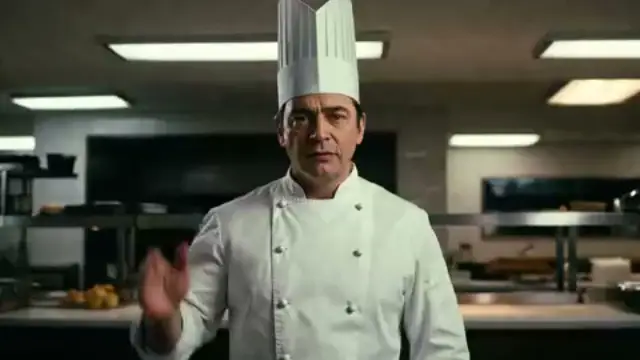
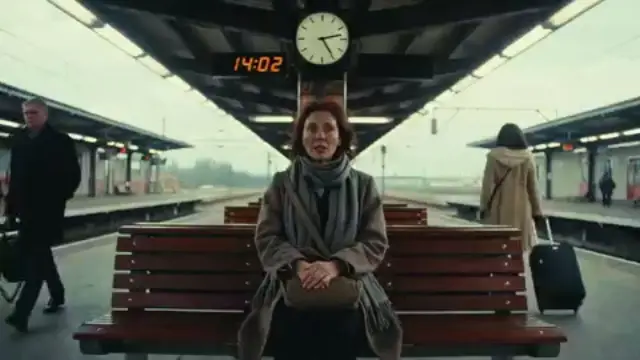
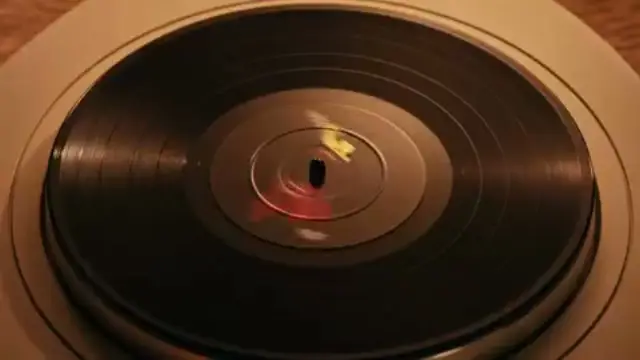
A crash cut slams two images together with no blend, so the join itself stings. One side of the splice and the other collide; unlike a smash that breaks an earned quiet, a crash cut often starts inside the event or hits like a drum from the first frame.

Narrative function
A trunk, a man, a knife already in play, then the story will explain how we got here. Or a cymbal, a face, a rehearsal that never had a polite establishing wide.
The next image must hurt, and it must hurt immediately. Use it as percussion, as in medias res, as a refusal of the soft open.
It is the wrong tool when you have just built a hush that should be betrayed: that betrayal is a Smash Cut. It is the wrong tool when you only skip time in one seat: that is a Jump Cut.
A few frames of interrupt are a Flash Cut, not a committed new scene. Do not open on a sensation the rest of the story cannot causally earn.
How it works
Cut A to B with maximum difference in scale, brightness, or violence of content, and with no mix. Often B is already mid-action (a trunk, a gun, a kit).
Mark any later temporal reset clearly (a title, a younger haircut) so the crash is a structure, not an accident. Prompt: crash cut on [Subject], two images colliding with no polite blend, a hard join that should sting.
When to use it
Use it to open on the consequence, to hit a downbeat, to refuse an establishing courtesy. Do not use it between two similar wides.
If A was a long prayer, consider smash. If B lasts three frames, consider flash.
Compared with similar shots
A Smash Cut breaks an earned state (quiet, closure, prayer). A crash cut is the collision as a blow, often before a state was offered.
A Jump Cut stays similar. A Flash Cut is too short to become the new scene.
Quick Cuts are a run of short shots; a crash is one brutal splice.
In film
Goodfellas opens in the trunk, then later supplies the life that led there. Fight Club starts inside a crisis and then rewinds the path.
Whiplash and Requiem for a Dream use hard joins as rhythmic blows. Use the sting and the delayed explanation, not a copied trunk.
- Goodfellas 1990The trunk scene precedes the account of Henry’s earlier life.
- Fight Club 1999The opening crisis is followed by the path that led there.
Prompt it
Crash cut on [Subject], two images colliding with no polite blend, a hard join that should sting. Name A and B, the scale or sound collision, and that B may already be mid-event.
For video, no dissolve, no fade, no matched contour unless the match is itself the crash.
What usually goes wrong
The usual wrong cousin is Smash Cut (after a hush) or Flash Cut (a few frames). The tell: a long quiet setup before the hit (that is smash), or B vanishing before it can be a scene (that is flash).
The fix: collide two committed images, start inside the event if that is the structure, cut hard.
Questions
What is Crash Cut in film?
A crash cut is a hard join where two images collide with no blend. Both sides are committed shots; the splice stings, often by starting inside an event or hitting like a drum.
Crash Cut vs Smash Cut
A smash cut betrays an earned quiet or closure. A crash cut is the collision itself, frequently from the first frame of a scene or as in medias res. Smash breaks a state; crash refuses to offer one.
When should I use Crash Cut?
Use it when the next image must hurt immediately, or when the story should start inside the consequence. Do not use it as a skip inside one similar frame.
How do I prompt Crash Cut for AI image or video?
Name two colliding images and forbid a blend. Example: Crash cut on [Subject], two images colliding with no polite blend, a hard join that should sting. Let B be mid-action if the structure needs it.