Dissolve
cross-dissolveAudio match transitionSonic metamorphosis
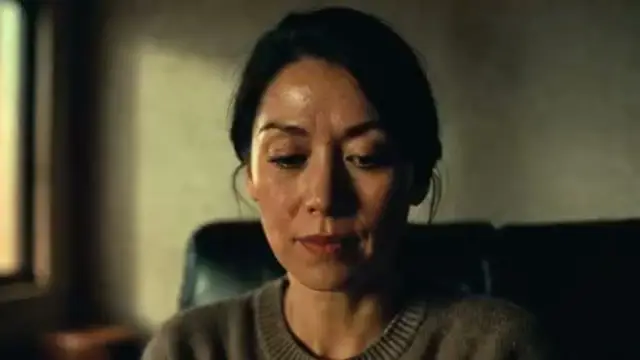
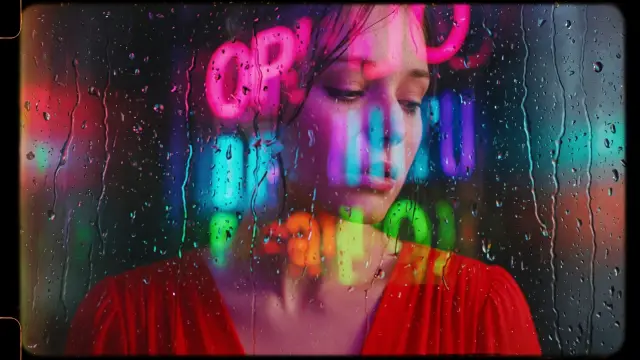
A dissolve gradually overlaps the outgoing shot with the incoming shot so both images occupy the frame for a measurable duration. Opacity of A falls as opacity of B rises; at the midpoint you are looking at two ghosts.

Narrative function
A face thins. A landscape thickens through it.
Time has passed, or memory has, and the cut did not want to be a door slam. Dissolves are for passage, recollection, or the gentle death of a scene.
It is the wrong tool when the next image should hurt, or when the correspondence should snap. Hurt is a Smash Cut.
Snap-rhyme is a Match Cut or Graphic Match. If you hold the overlap as a meaning in itself, you are in Double Exposure territory, not a transition.
A dissolve does not automatically mean years have passed. Duration, sound, and context do that work.
A two-frame dissolve is just a soft cut.
How it works
Mix A and B over time: typically a dozen frames to a few seconds. Keep a shared compositional hook if you want the overlap to read (a fan through a rotor, a face through a ceiling).
Decide whether sound dissolves with picture or bridges first. This is an optical or digital mix, not a camera move.
Prompt: dissolve from [Subject] into another time or place, overlapping ghosts, longer than a cut admits.
When to use it
Use it for memory, montage-like passage, or a scene that should die instead of stop. Do not use it to hide a bad match on action.
If the two sides should collide, cut hard.
Compared with similar shots
A Fade In / Fade Out goes to a uniform field (black or color) so there is a moment with no scene. A dissolve never empties the frame; B is already there.
Double Exposure holds two images as a stacked meaning, not as a handoff. Morph warps contours; dissolve only changes opacity.
Wipe uses a traveling boundary instead of a mix.
In film
Citizen Kane uses dissolves as time's grammar through a life. The Godfather lets faces and rooms bleed across turns of power.
Apocalypse Now layers hotel fan, jungle, and helicopter so picture and sound dissolve together. The 39 Steps bridges a scream into a train whistle, a sonic cousin of the mix.
Grammar of overlap, not a look to steal.
- Apocalypse Now 1979Helicopter imagery and hotel-fan perception are linked through sound and image.
- The 39 Steps 1935A scream is bridged into a train whistle.
- The Stendhal Syndrome 1996The painting and subjective immersion are linked through overlapping images.
- Apocalypse Now 1979The opening layers landscape, face and interior imagery.
Prompt it
Dissolve from [Subject] into another time or place, overlapping ghosts, a longer time than a cut admits. Name both images, a shared hook if any (shape, motion, sound), and the mix duration.
For video, two full shots plus an opacity crossfade; do not morph bodies or melt sets.
What usually goes wrong
The usual wrong cousin is a Fade In / Fade Out (empty field in the middle) or a morph. The tell: the frame goes to black, or A warps into B.
The fix: keep both pictures intact, change only opacity, let the midpoint show two readable images.
Questions
What is Dissolve in film?
A dissolve overlaps the outgoing shot with the incoming shot so both are visible for a duration. One side fades in presence while the other takes over; there is no empty field in between.
Dissolve vs Fade In / Fade Out
A fade goes to or from a uniform black or color field, a pause with no scene. A dissolve hands one picture to another through a mix. Fade punctuates; dissolve bleeds.
When should I use Dissolve?
Use it for memory, elapsed time, or a scene that should die softly. Do not use it when the next image should smash or when a hard graphic rhyme is the point.
How do I prompt Dissolve for AI image or video?
Name both shots and the overlap. Example: Dissolve from [Subject] into another time or place, overlapping ghosts. Specify a mix, not a morph, and how long the ghosts share the frame.