Interview
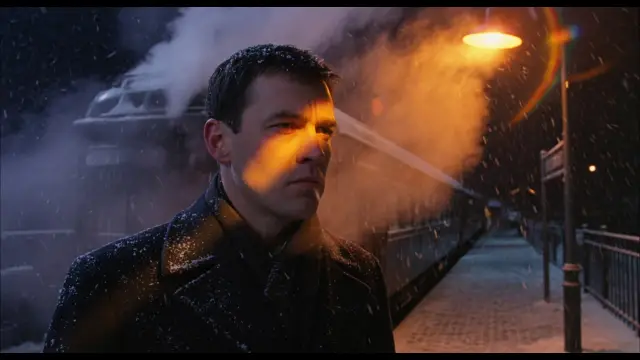
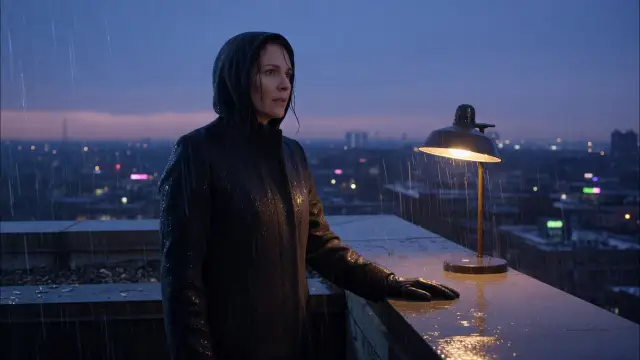
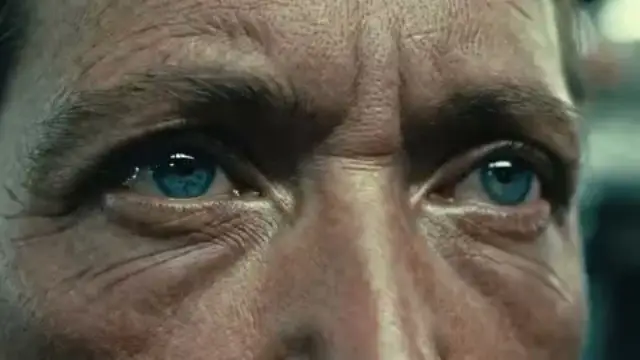
Interview cinematography is a talking-head setup: stable size, eyeline just off the lens, a listener implied. Someone is answering a question we often do not hear.
Narrative function
An interview frame is not merely an MCU. It is a social geometry: the subject speaks to a person beside the camera, look space opens toward that listener, and the audience sits in on an answered question.
Direct address into the lens is a different contract (confession, host, warning). It is the wrong tool when two fictional characters are in a scene together and you needed OTS or a two-shot.
It is also the wrong tool if the eyeline hits the glass and you did not mean to break the fourth wall. Keep the size stable; hunting around the face turns testimony into a music video.
How it works
Size usually Medium Close-Up or a loose Close-Up. Camera at Eye Level.
Eyeline a few degrees off lens, toward an implied interviewer. Give Look Space on the look side.
Motivated, simple key; catchlight in the eyes. Prompt: Interview frame of [Subject], talking-head distance, eyeline just off lens, a listener implied.
When to use it
Use it when someone is answering a question we did not hear: documentary testimony, a fake-doc confession, a talking-head insert in a drama. Do not put the eyeline into the lens unless you mean direct address, and do not use this grammar for a two-person scene that should be OTS.
Compared with similar shots
A Medium Close-Up is only a crop; interview is the off-lens eyeline plus implied listener. Eye level is the height.
Over-the-Shoulder would show the questioner. A video portrait holds a face as a study, often without the Q&A contract.
Interview means testimony geometry.
In film
The Fog of War parks a speaker in this grammar so policy becomes a face answering questions. Many social-issue films borrow the same talking-head language (including The Social Dilemma's interview mode): stable size, off-lens eyeline, a listener we take on faith.
Grammar: someone is being asked.
Prompt it
Lock eyeline and size. Example: Interview frame of [Subject], talking-head distance, eyeline just off lens, a listener implied.
Specify look space toward camera-left or camera-right. For video, hold; small hand motion is fine.
Do not stare down the lens unless you want direct address.
What usually goes wrong
The usual wrong cousin is a generic Medium Close-Up with eyes into the lens, or an Over-the-Shoulder Coverage of a scene. The tell is a host stare, or a second character in a fictional blocking.
Fix: off-lens eyeline, implied listener, stable talking-head size.
Questions
What is Interview in film?
Interview cinematography is a talking-head setup in which the subject answers an offscreen questioner. Size is stable, the eyeline sits just off the lens, and a listener is implied even if we never see them.
Interview vs Medium Close-Up
MCU is a chest-up crop that can be used for any dialogue. Interview is a setup: off-lens eyeline, look space toward a questioner, testimony as the job. You can shoot an MCU that is not an interview, and an interview that is slightly tighter or looser than MCU.
When should I use Interview?
Use it for testimony, documentary talking heads, or a drama that borrows that contract. Do not use it when two characters should share a scene in OTS, and do not aim the eyes at the lens unless you mean direct address.
How do I prompt Interview for AI image or video?
Write Interview frame of [Subject], talking-head distance, eyeline just off lens, a listener implied. Add look space and eye-level. For video, hold the size; do not tour the room.