Morph
Morphing / Dissolve Effect
A morphing effect transforms one image, face, shape, or object into another by interpolating corresponding geometry over time. It is a continuous becoming, not a crossfade of opacities and not two exposures stacked.

Narrative function
A face does not cut to another face. Vertices travel.
The nose, the jaw, the silhouette pass through illegal in-between states. Identity is unstable for a measured number of seconds, then a new form is solid.
Use it when the story is transformation: a liquid metal man, a mask that is anatomy, a person becoming another person. The audience should watch the change, not infer it across a dissolve.
It is the wrong tool when two images should merely trade dominance (dissolve), coexist (double exposure), or rhyme across a cut (match cut). If you still see both complete faces as ghosts, you dissolved.
If the cut is hard and only the outline matches, you graphic-matched.
How it works
Establish correspondence: eyes to eyes, contour to contour. Interpolate, often with a cross-dissolve of textures on top of the warp.
Duration is part of the grammar (a six-second become is a sentence). Prompt: [Subject] morphs into a named second form over N seconds, continuous transformation, not a dissolve, not a cut.
When to use it
A face becomes another face over about six seconds, features traveling, one identity at the end. Do not crossfade two full portraits and call it a morph.
Compared with similar shots
Dissolve changes opacity from shot A to shot B. Forms do not have to correspond.
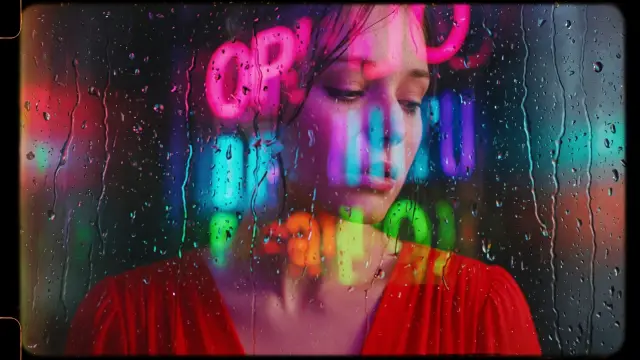
Double Exposure holds both images. Match Cut joins two shots at a similar shape without interpolating the in-between.
Duplication places two solid versions of one person in a space. Morph turns one into the other.
In film
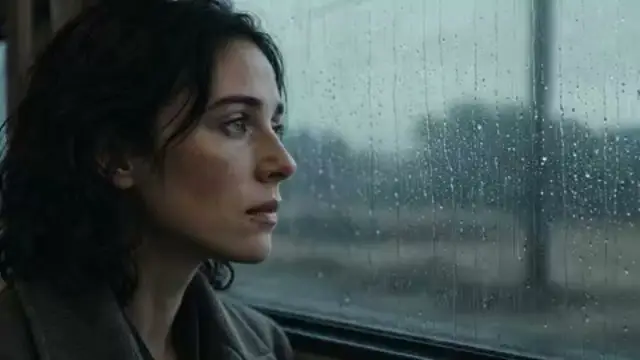
Terminator 2 interpolates the T-1000 through chrome and human geometry. The Mask treats anatomy as a morph target.
Willow (1988) and Michael Jackson's Black or White are early digital morph grammar: correspondence plus time.
Prompt it
Name both states and the duration. Still: Morph between [Subject] and another named state, face or body becoming, in-between geometry visible.
Video: [Subject] morphs into another form or face over 6 seconds, a continuous transformation, not a dissolve.
What usually goes wrong
Wrong cousin: dissolve, double exposure, or match cut. Tell: two ghosts, a hard cut on similar shapes, or a texture fade with no warp.
Fix: require corresponding features to travel, show illegal in-betweens, land on one solid form.
Questions
What is a morph in film?
A continuous geometric transformation from one image or body into another. Features correspond and interpolate. It is not a fade and not a stack.
Morph vs dissolve
A dissolve is opacity. A morph is shape. In a dissolve you can see two complete pictures. In a morph you see one picture whose anatomy is traveling.
When should I use a morph?
When identity or matter is unstable and the change must be watched. Do not use it as a fancy dissolve between unrelated scenes.
How do I prompt a morph for AI image or video?
Name the start form, the end form, and the duration. Demand continuous transformation with traveling features. Ban dissolve and double exposure.