Pedestal Up
boom uppedestal down
A pedestal shot moves the entire camera vertically without changing its tilt. The lens rises on a column, eyeline climbs, and architecture slides down the frame while pitch stays constant.

Narrative function
Height changes without the drama of a crane arc. You are still looking the same way, only from higher, so rank and horizon shift together.
It is a formal lift, useful when the camera must stay architecturally true. It is the wrong tool when you need to boom out over a crowd or ease back as you rise.
A pedestal does not draw an arc; a crane does.
How it works
Use a studio pedestal, a column, or a virtual Y-axis translate. Lock tilt and usually lock yaw.
The nodal point gains height, so you get vertical parallax: near objects drop faster than the far skyline. Prompt a pedestal up, camera rising vertically on a column with no tilt change, eyeline climbing.
When to use it
Use it to change height without the drama of a crane arc. Concrete beat: from a tabletop to the standing speaker, looking the same direction the whole way.
Do not add a tilt-up and call it a pedestal.
Compared with similar shots
A Crane Up arcs through space and often eases backward, changing X and Z as well as Y. A Tilt Up only pitches from a fixed height.
A Jib Shot is a short pivoting arm, so its path is an arc, not a column. Pedestal Down is the same column the other way.

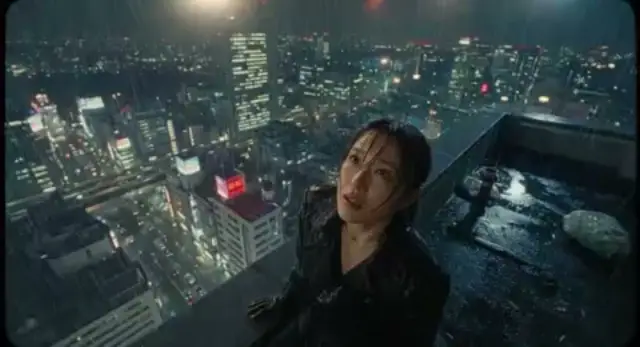
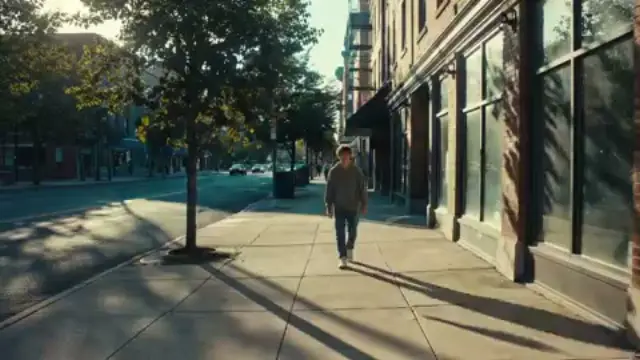
In film
2001: A Space Odyssey treats vertical camera placement as spacecraft geometry rather than as a flourish. Studio multi-camera drama uses the pedestal column as the default lift.
Pair those as grammar for tilt-locked height, not as a look to clone.
Prompt it
Pedestal up on [Subject], camera rising vertically on a column with no tilt change, eyeline climbing, architecture sliding down the frame. For motion: the camera rises straight up on a pedestal, keeping the same tilt, lifting past [Subject].
What usually goes wrong
The usual wrong cousin is a Tilt Up or a Crane Up. The tell is a pitching horizon, or a backward boom that reveals a city.
The fix: straight Y travel, tilt locked, no arc.
Questions
What is Pedestal Up in film?
It is a straight vertical rise of the whole camera with tilt held constant, so you look from a higher station in the same direction.
Pedestal Up vs Crane Up
Crane up follows an arm's arc and often backs away. Pedestal up is a column: height only, pitch unchanged.
When should I use Pedestal Up?
When you need a clean height change and a stable horizon, often in architecture or studio blocking. Do not use it for a skyline reveal that requires boom-out.
How do I prompt Pedestal Up for AI image or video?
Say camera rises straight up on a pedestal, no tilt change, no crane arc. Name start height and end height.