Video Game
Video game cinematography uses playable camera logic: a follow cam, an isometric view, or an FPS eyeline, with space readable as a level and a HUD implied. Collision, boom height, and pathing constrain the lens the way a game engine would.

Narrative function
The world is playable. A character moves and the camera booms behind at a fixed height, or the map is seen at 45 degrees, or we look through a reticle.
Collectible space, ledges, and arenas matter. A HUD may sit in the glass.
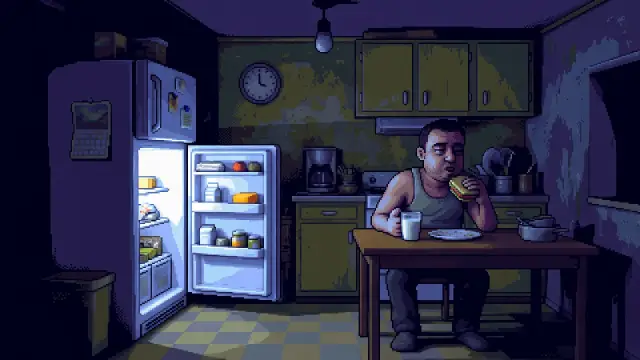
It is not Pixel Art unless the level is also tiled. It is not FPV Drone (a real or simulated racing drone through a physical world).
It is not photoreal live action with a fake reticle slapped on. The camera must behave like a game camera.
How it works
Pick the logic: third-person follow (boom 2 to 3 meters, lag, collision), isometric 45-degree orthographic, or FPS. Keep the path readable.
Add a HUD only if the beat is play, not if it is a movie cover of a game. Motion: analog stick ease, not a film dolly's ease.
Prompt follow cam or isometric logic, HUD implied, space as a level.
When to use it
Use it when space must feel playable. Do not use it as a skin on a normal coverage scene, and do not reduce it to chunky pixels unless the game is pixel-art.
Compared with similar shots
Video Game is engine-like camera logic. Pixel Art is sampling.
FPV Drone is a physical flying camera through real space. Animation may render a game, or not.
If the camera dollies like a film crew and there is no follow, iso, or FPS constraint, it is not this look.

In film
Free Guy (a life inside a game's follow-cam and HUD logic). Scott Pilgrim vs.
the World (fight space, UI, and level logic inside live action). Grammar, not frames to copy.
Prompt it
Video-game camera on [Subject], follow cam or isometric logic, HUD implied, space as a level, boom height locked, path readable. Name the camera type.
Do not describe a film dolly unless the game would dolly.
What usually goes wrong
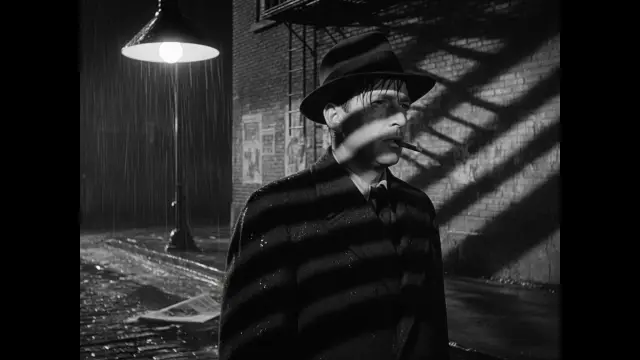
The usual wrong cousin is Pixel Art or a film Follow Shot shot with a reticle overlay. The tell is continuous film blocking, or tiles you did not want.
Fix: lock boom height or isometric angle, make the path a level, and let the camera collide or lag like an engine.
Questions
What is Video Game in film?
A look that borrows playable camera logic: follow cam, isometric, or FPS, with space as a level and often a HUD. The lens is constrained like an engine, not like a film crew.
Video Game vs Pixel Art
Pixel art is how the image is sampled. Video-game cinematography is how the camera is allowed to move through a playable space. A game look can be 3D and continuous. Pixel art cannot hide its tiles.
When should I use Video Game?
When the beat is play: a level, a follow, a HUD, a boss arena. Skip it for a normal coverage scene with a fake overlay, for drone FPV, or for pixel tiles that are not in the brief.
How do I prompt Video Game for AI image or video?
Write: Video-game camera on [Subject], follow cam or isometric logic, HUD implied, space as a level. Name boom height or the 45-degree view. Do not describe a film dolly by default.